A compulsive liar is someone who lies about a lot of things without any real gain or benefit. The term compulsive lying is often mixed up with pathological lying since both conditions have similar motivations and signs. However, they are two very different things.
Compulsive lying involves distorting reality with the aim to avoid or mask uncomfortable situations or feelings. The act is compulsive and it can be a challenge to stop without external help.
People who lie compulsively do so because they’re driven by an unconscious need to change reality. Those who lie pathologically do it for more conscious reasons. Pathological lying often involves the exploitation and manipulation of others for financial or personal gain.
The key to understanding the difference between the two is knowing what motivates the lie. Compulsive liars usually lie out of anxiety or fear, while pathological liars tend to do so to deceive or manipulate people.
Experts are unable to say exactly what causes compulsive lying because the condition isn’t very well understood. However, it’s thought that compulsive lying may be linked to a number of environmental and psychological factors.
Some of the most common causes of compulsive lying include:
Sometimes, compulsive lying is connected to a mental health condition, such as post-traumatic stress disorder (PTSD), bipolar disorder, or borderline personality disorder (BPD). Only a therapist is qualified to analyze someone and make this type of diagnosis.
In some cases, compulsive lying can be a form of learned behavior that someone picked up from their environment or family. Individuals who grew up in places where lying was encouraged or rewarded may have developed compulsive lying habits in order to deal with difficult situations and emotions.
If you have a feeling that someone you know may be a compulsive liar, there are several signs you can look for to make sure. If you notice the following signs in a friend or family member, you may want to support them to get the help they need to kick the habit.
If you find yourself lying for seemingly no reason, you may be a compulsive liar yourself. See if you often show any of the following signs and consider getting help from a professional if you do.
With help, someone can overcome their compulsive lying habits and stop altogether. Treatment for this condition usually involves a combination of cognitive behavior therapy (CBT) and therapy.
Therapy gives the individual a chance to speak honestly and openly about what motivates them to lie compulsively. The first step in therapy to treat compulsive lying is to determine the root causes. These often involve a dysfunctional family environment or complex psychological issues.
By acknowledging and addressing the underlying causes, the individual can develop healthier and more effective ways of expressing themselves, while learning more honest communication patterns, too. With the support of a good therapist and the determination to quit the habit, compulsive lying can be successfully managed.
CBT is an effective way of treating compulsive lying because it helps people develop new ways of behaving and thinking. This allows them to break their compulsive lying patterns and commit to healthier habits.
Some people find making small lifestyle changes can greatly help. Things like making a new exercise regime, finding time for meditation, and getting enough sleep can reduce the urge to lie compulsively by improving mental health and lowering stress levels. Medication has been proven to be successful at reducing compulsive behaviors in some people. It can also relieve depression and anxiety, which are often the causes of the condition. Selective serotonin reuptake inhibitors (SSRIs) are sometimes prescribed to improve compulsive behaviors.
With the right help and treatment, any compulsive liar can uncover the motivation behind their behavior and change it by developing healthy coping techniques for managing difficult emotions. In turn, this can help them live a more satisfying and fulfilling life.
If you or someone close to you is struggling with compulsive lying, help is at hand. Seek support from family members, friends, or a mental health professional. A therapist can help get to the root cause of the unwanted behavior and offer effective treatments to break away from compulsive lying and improve the quality of life.
Compulsive liars exhibit several common traits, including:
Pathological Liar:
Lies consistently without an apparent reason.
Often linked to personality disorders like narcissism or antisocial behavior.
May create elaborate false narratives.
Compulsive Liar:
Lies due to an uncontrollable urge or compulsion.
Often tied to emotional distress, anxiety, or low self-esteem.
Lies can be more impulsive and less calculated.
Compulsive lying is not recognized as a standalone mental illness in the Diagnostic and Statistical Manual of Mental Disorders (DSM-5).
As the days grow shorter and the nights longer, many people experience a shift in their mood and energy levels, often due to the end of daylight saving time in the fall, when clocks are set back an hour, resulting in fewer daylight hours. This change can trigger seasonal affective disorder (SAD), a specific type of depression influenced by the changing seasons and diminishing daylight hours. Here are several strategies to cope with the challenges posed by time change and daylight hour reduction, as well as ways to combat SAD effectively especially when DST sets in.
One of the fundamental strategies in coping with the challenges posed by time change and reduced daylight hours involves adhering to a consistent routine. This encompasses maintaining a regular sleep schedule, even on weekends. The importance of this cannot be overstated. Our bodies operate on internal clocks, and disrupting this delicate balance can wreak havoc on our mental well-being. When the world outside is changing, a stable routine provides a sense of predictability and control.
Exposure to natural light emerges as a crucial factor in regulating our body’s circadian rhythm, which can be significantly disrupted by the abrupt time change. Spending time outdoors during the day becomes a therapeutic activity, even if it’s just a short walk. Sunlight, or even daylight on a cloudy day, has a remarkable impact on our mood and energy levels. It triggers the brain to produce serotonin, a neurotransmitter often associated with feelings of well-being and happiness. The significance of this natural remedy cannot be overstated.
Regular physical activity, especially during the darker months, proves to be a powerful tool in combating the symptoms of SAD. Exercise, for at least 30 minutes on most days of the week, stimulates the production of endorphins, our body’s natural stress relievers. It enhances our overall mood and energy levels, acting as a natural antidote to the lethargy often experienced during depressive episodes. Exercise also improves the quality of sleep, which is frequently disrupted during the time change period. The benefits are not merely physical; they extend to our psychological well-being, making exercise a holistic approach to managing SAD.
Ensuring good sleep hygiene becomes paramount when combating the challenges posed by time change. The quality of sleep is intimately connected with our mental health. Ensuring the bedroom is a conducive environment for rest – cool, dark, and quiet – sets the stage for a restful night. Additionally, the blue light emitted by electronic devices disrupts the production of melatonin, a hormone responsible for regulating sleep. Hence, it is advisable to refrain from using electronic devices before bedtime, allowing our bodies to naturally wind down, preparing for a rejuvenating sleep.
In recent years, light therapy has emerged as a highly effective treatment for SAD. This therapy involves exposure to bright, artificial light, mimicking natural sunlight. The light emitted by these devices positively impacts the brain, regulating the production of neurotransmitters and hormones, thus alleviating the symptoms of depression. Consulting a healthcare professional can provide valuable insights into whether light therapy might be a suitable option.
When it comes to combating the profound effects of SAD, seeking professional help is indispensable. Consulting a doctor is the first step in understanding the condition and formulating an appropriate treatment plan. The symptoms of SAD often overlap with those of other forms of depression. Hence, it’s crucial to obtain a definitive diagnosis to tailor the treatment accordingly. Talking to a mental health professional can provide profound insights into the condition, offering coping mechanisms and strategies that are specifically tailored to the individual. One such therapy, cognitive-behavioral therapy (CBT), has proven particularly effective in treating SAD. It assists individuals in recognizing negative thought patterns and equips them with coping strategies to navigate through the challenging periods. SAD can even lead to divorce.
In some cases, medication might be recommended. Antidepressant medications can significantly alleviate the symptoms of SAD, helping individuals regain control over their lives. The decision to prescribe medication is a nuanced one and should be made after a thorough evaluation by a healthcare provider. Medications, when combined with therapy, can provide a multifaceted approach, tackling the symptoms from both physiological and psychological angles.
Light boxes, emitting bright artificial light, have garnered attention as a powerful tool in managing SAD. These devices are designed to simulate natural sunlight and have demonstrated considerable success in alleviating the symptoms of depression. However, their usage should be under the guidance of a healthcare provider, ensuring the correct intensity and duration to maximize the therapeutic effects.
Self-care practices emerge as an essential component in the holistic management of SAD. Taking care of one’s physical health through a balanced diet, regular exercise, and adequate sleep lays a robust foundation for mental well-being. These elements are interconnected; physical health profoundly influences mental health, and nurturing the body paves the way for a resilient mind.
Social connections play a pivotal role in our mental health. Spending quality time with loved ones, engaging in activities that bring joy, and fostering meaningful relationships provide emotional support and a sense of belonging. During the darker months, when the temptation to withdraw is strong, nurturing these connections becomes even more crucial. Isolation exacerbates the symptoms of depression, making social interactions a potent antidote to the profound sense of loneliness that often accompanies SAD.
Despite 12.5 million people suffering from C-PTSD across the US, finding a suitable complex PTSD therapist in your local area can be incredibly difficult. The symptoms of complex PTSD can significantly impact the quality of your life, affecting not only your physical and emotional well-being but extending to your relationships with those around you and the way you perform at work or school. Someone’s death is an example of an event that can cause trauma as described in this article by Heart In Diamond.
If you have taken online trauma therapy and symptoms, do not ignore your symptoms. You need to return to the traumatic events of your life in your brain that affected you so gravely and resolve them so you can move forward into a healthier, happier stage of your life. Recovering from PTSD is rarely something that you can do alone. Instead, you need the help of a trained and empathetic therapist who can support you as you acknowledge your trauma and the symptoms you’re experiencing. The vast majority don’t even know they have PTSD.
While finding a local PTSD or C-PTSD therapist is difficult, it’s not impossible. Here are the steps we recommend you take to find a suitable complex PTSD therapist in your area to begin your treatment:
One of the easiest ways to find highly-regarded therapists in your local area is to ask your doctor for a recommendation. As your doctor is likely already familiar with you and your condition, they should be able to suggest someone suitable for you.
If you’re currently attending therapy for a different problem, ask your therapist for a referral to a CPTSD therapist. There’s a good chance they’ll know of all the local complex PTSD counselors and will be able to make a good recommendation based on how you’ve interacted in your past sessions.
If neither of the above options works, you can always try searching for local CPTSD therapists online. Try typing “complex PTSD therapist near me” or include your city or state in your search, for example: “complex PTSD therapist Ohio.” You might have to wade through many adverts and unsuitable results, but it could give you options you never previously considered.
An alternative to finding a complex PTSD therapist close to you is to try online trauma therapy. With online therapy, you can talk to a trained and qualified therapist who is licensed to treat in your state without having to go to their office physically. Teletherapy means you can speak to someone whose office is located hundreds of miles away from you without the hassle of having to go there.
Online therapy takes several different forms. At Cyti Psychological, we use online video chatting software, so as well as speaking to your therapist, you can also see them. We connect so much better with others when we can see them, and feeling a genuine connection with your therapist is essential for healing.
Many studies have revealed that online therapy is just as effective as in-person therapy. In some cases, people who experienced both types of treatment found the counseling received through a smart device to be even more helpful and healing than counseling in a therapist’s office.
There are several different ways to treat C-PTSD, but they all have in common their concentration on the traumatic events experienced by the client. Here are some of the most common techniques used to treat PTSD and C-PTSD successfully:
Complex PTSD treatment works by helping you regain a sense of who you are. Experiencing emotional trauma over and over can have an incredibly damaging effect on your self-identity and your self-esteem. It can also harm your life goals and personal values. Through the above methods, your CPTSD therapist will help you:
Therapists sometimes prescribe medication to help ease CPTSD symptoms. However, you must understand that psychotropic medications do not cure the condition alone. They improve symptoms such as anxiety and depression when they’re so severe that they make therapy unnecessarily tricky so that you can use the tools the therapist is offering.
If you’re suffering from complex PTSD symptoms, it’s essential you seek help. No matter how much you’d like them to, the symptoms you’re experiencing won’t go away on their own. While there are several different ways to treat CPTSD, the best way is to talk to a mental health professional who understands your condition and has helped many others just like you take back control of their lives.
With the incredible resources, we have available today, you’re not limited to the CPTSD therapists in your local area, nor do you have to travel miles to see your chosen therapist. Online therapy provides you with a new, better option to see your preferred therapist from the comfort of your own home, whenever it suits you.
Take the first step to a better life today and schedule your initial appointment with one of our qualified therapists.
There are many different kinds of attraction — sexual, romantic, physical, and emotional are some of the most common types of attraction that you may be familiar with. But there’s a more recent form of attraction that has people talking — aesthetic attraction. But what exactly does it mean and how is it different from other kinds of attraction?
The easiest way to explain aesthetic attraction is to first define attraction. Attraction is the universal experience that encourages us to like certain people. The way you like a person is determined by the type of attraction you feel for them:
Out of the above, aesthetic attraction is most similar to physical attraction. But, unlike physical attraction, aesthetic attraction isn’t sexual. To be aesthetically attracted to someone means to appreciate the appearance of another person while not feeling romantically or sexually attracted to them.
Aesthetic attraction can involve being attracted to someone’s style, figure, facial features, the way they dress, hairstyle, gait, or overall look.
Here are two examples of aesthetic attraction:
In the first example, there’s only one kind of attraction — aesthetic attraction. In the second example, there are two types of attraction — aesthetic and sexual. Aesthetic attraction is often coupled with romantic or sexual attraction, but this doesn’t always have to be the case.
The term aesthetic attraction was first created by the asexual community in 2005. Many asexual people find themselves visually attracted to the physical features and/or style of another person with no interest in having romantic, physical, or sexual contact with them.
You’ve almost certainly felt an aesthetic attraction to someone at least once in your life. Aesthetic attraction feels like an involuntary, magnetic desire to stare at someone and appreciate the way they look. It can feel the same way as looking at a gorgeous view you can’t take your eyes off or a spectacular photograph you can’t help but stop and look at.
When you’re aesthetically attracted to someone, it’s common to gaze at that person for longer than you’d typically look at someone. All you want to do is stare at them — you have no urge to talk to them or form a relationship.
Don’t worry if you’ve never felt aesthetically attracted to someone before. We all have vastly different preferences when it comes to the kind of attraction we value the most.
Some people may have an emotional bond and desire to have sex with someone without being aesthetically attracted to them at all. On the other hand, other people may prioritize aesthetic attraction over romantic or intellectual attraction when looking for a partner.
Although sexual and romantic are two of the most common types of attraction in today’s world, there are many other kinds. You may have found yourself feeling attracted to someone, but struggle to determine exactly how you feel. Are you attracted to them physically? Do you admire their intelligence or personality? Do you want to be sexually or romantically intimate with them?
Aesthetic attraction is something many people feel regularly. It can often be confusing and take some time to understand. While it’s sometimes an isolated feeling, it’s often the cause of sexual, physical, or romantic attraction.
It’s important to remember that there are absolutely no rights or wrongs when it comes to feelings. How you experience attraction is unique to you and no way is better than any other. By learning more about attraction and expanding your knowledge of the subject, you can better understand yourself and improve your current and future platonic and romantic relationships.
If you’ve been struggling with attraction and you want to better understand your feelings, we’re here for you. Get in touch with us today and we can help support you through your emotional journey.
Signs of aesthetic attraction can vary from person to person, but some common indicators include:
Aesthetic attraction is primarily based on physical appearance. It refers to the feeling of being drawn to someone because you find them visually appealing or attractive. Emotional attraction, on the other hand, is based on a person’s personality, character, and emotional qualities. It involves feeling a deep connection with someone because of their emotional compatibility, kindness, sense of humor, shared values, and other non-physical factors.
Yes, it is possible to be demisexual and experience aesthetic attraction. Demisexuality is a sexual orientation in which a person typically does not experience sexual attraction to others until they have formed a strong emotional or romantic connection with them. This means that demisexual individuals may not experience immediate sexual attraction based solely on physical appearance or aesthetics.
Youth today face a variety of pressures, including bullying and the negative effects of social media. According to a 2018 Pew Research Center survey, 59% of U.S. teens have personally experienced at least one of six types of abusive online behaviors. Social media use is hugely common among teenagers, but the health effects of cyberbullying on social media sites are largely unknown. The pressures of portraying the ‘perfect’ life on social media can lead to depression and other serious mental health issues. LGBTQ+ youth are particularly vulnerable to a wide range of health, mental health, and social problems such as eating disorders, sexually transmitted diseases, school difficulties, forced sex, homelessness, violence, and suicide. It is important to recognize the negative impact of societal pressures on young people and to provide resources to help them navigate these challenges.
For those struggling with depression, anxiety, or other mental health issues, there are resources available. Cyticlinics.com provides a variety of articles and resources on topics such as understanding depression in young women, depression in stay-at-home moms, and anxiety. Additionally, the website offers information on therapeutic practices such as cognitive-behavioral therapy (CBT), dialectical behavior therapy (DBT), and eye movement desensitization and reprocessing (EMDR).
For LGBTQ+ youth, there are resources available to help them navigate the unique challenges they face. The Substance Abuse and Mental Health Services Administration (SAMHSA) provides evidence-based care for LGBTQI+ youth, as well as resources for their families, providers, community organizations, and government agencies. The Child Mind Institute offers information on how social media affects teenagers and how to help them navigate the negative effects of social media.
Social media platforms have become ubiquitous in the lives of teenagers, offering them a space to connect, share, and express themselves. Despite all of this, these platforms also evoke loneliness and the anonymity provided by these platforms has also fostered a toxic environment where cyberbullying thrives. The implications of online harassment on young minds are profound and often overlooked. Victims of cyberbullying are not merely subjected to hurtful words; they grapple with emotional scars that can lead to severe mental health issues such as depression and anxiety. The pressure to portray a flawless life online, perpetuated by societal expectations and amplified by social media, exacerbates these challenges. The relentless pursuit of the ‘perfect’ image can shatter self-esteem and lead to a sense of inadequacy, pushing vulnerable youth towards the precipice of despair.
LGBTQ+ youth, in particular, face a unique set of challenges that stem from societal prejudices and stereotypes. The alarming array of health, mental health, and social problems faced by these young individuals include eating disorders, sexually transmitted diseases, school difficulties, forced sex, homelessness, violence, and tragically, suicide. The journey towards self-acceptance is often marred by discrimination and rejection, creating an environment where their mental well-being is constantly under siege. It is crucial to recognize the vulnerabilities of LGBTQ+ youth and extend a helping hand to guide them through these turbulent times.
In the face of these daunting challenges, there is hope. Organizations and platforms dedicated to mental health and the well-being of young individuals have emerged as pillars of support. Websites like cyticlinics.com offer a wealth of resources, including articles on understanding depression in young women and stay-at-home moms, as well as addressing anxiety. These resources provide invaluable insights and guidance, empowering individuals to confront their struggles head-on.
Furthermore, therapeutic practices such as cognitive-behavioral therapy (CBT), dialectical behavior therapy (DBT), and eye movement desensitization and reprocessing (EMDR) have proven to be effective tools in managing mental health issues. By disseminating information about these therapies, we can enable young people to make informed decisions about their mental health care.
For LGBTQ+ youth, organizations like the Substance Abuse and Mental Health Services Administration (SAMHSA) and the Child Mind Institute offer specialized support. SAMHSA provides evidence-based care tailored to LGBTQI+ youth, along with resources for their families, providers, community organizations, and government agencies. The Child Mind Institute not only sheds light on how social media affects teenagers but also provides strategies to help them navigate the negative aspects of the digital realm.
The challenges faced by the youth today are daunting, but they are not insurmountable. By acknowledging the detrimental effects of societal pressures, particularly those emanating from social media and prejudice, we take the first step towards a more compassionate society. It is incumbent upon us to support and empower the younger generation by providing them with the tools and resources necessary to navigate this complex world.
Through education, open dialogue, and the provision of accessible mental health resources, we can foster resilience in our youth. By doing so, we equip them with the strength to overcome adversities, embrace their identities, and lead healthy, fulfilling lives. Let us stand together as advocates for change, ensuring that no young soul feels lost or forsaken in the face of life’s challenges. Together, we can create a brighter, more empathetic future for the generations to come.
TikTok, Facebook, Instagram…not all apps are huge time-sucks designed to tempt you down an endless rabbit hole. Some of them can be genuinely useful and positively impact your life. If you’ve got ADHD (Attention Deficit Hyperactivity Disorder), you could benefit greatly from an ADHD app.
Downloading an app isn’t going to cure your condition — but it could go a long way to helping you manage your symptoms and improve your life. A combination of therapy and medication is often the best way to cope with your symptoms, but not everyone has access to these two things.
The following apps can help you deal with all kinds of ADHD symptoms, whether you have the predominantly inattentive version, the predominantly hyperactive-impulsive version, or the combined version.

Focus@Will uses specially-engineered audio with frequencies that are similar to human voices removed. We typically find these frequencies distracting, therefore listening to music with them removed helps us focus and get more done.
“Research showed ⅔ people like to listen to music while they work or study, but it’s difficult to find and manage sounds that consistently work well. So we created a new neuroscience-based music service that helps increase your focus by reducing distractions, energizing you and helping you hit those critical deadlines.” – Will Henshall, CEO/Founder

OnceHub encourages you to better prioritize your time and the tasks you manage each day. It integrates seamlessly with Google Calendar and helps you avoid snafus like double-booking clients and missing meetings.
“OnceHub makes them more efficient in their scheduling. They can have more meetings. Making meetings means they make more money. It makes them more disciplined in keeping their calendar.” – Rami Goraly, CEO/Founder
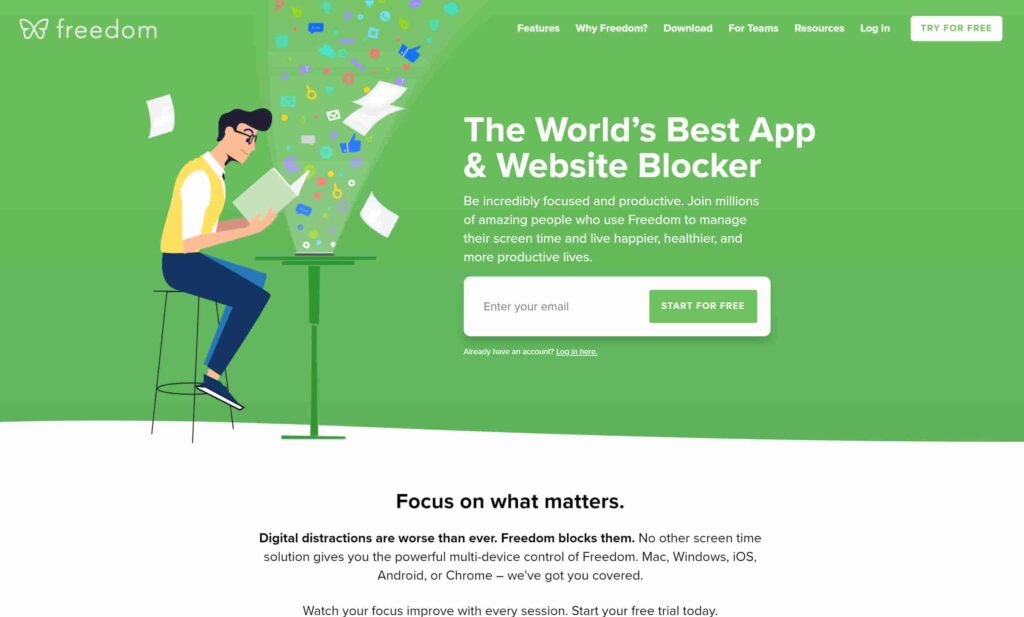
Freedom allows you to set up a weekly schedule with the days and times you want it to work. During those times, the app blocks your internet access, forcing you to focus on the task at hand.
In response to the question, “What fact, statistic, or research about distractions or multitasking do you find most astounding?”, Fred Stutzman, CEO/Founder of Freedom, responded:
“Two things resonate with me – the first is Gloria Mark’s finding that it takes over 20 minutes to recover from a distraction. When you think about all of the distractions that you experience during the day, it is hard to find time for real focus without first mindfully managing distractions. The second comes from research on task switching; we’ve known for a long time that multitasking increases cognitive load, which reduces efficiency. And now we see that the simple existence of alternatives – being able to switch to that Twitter tab, or check the news – increases cognitive load. Modern computing is this perfect storm of distraction – imagine what we’d get done if we worked at our potential?” – Fred Stutzman, CEO/Founder
https://www.rememberthemilk.com/
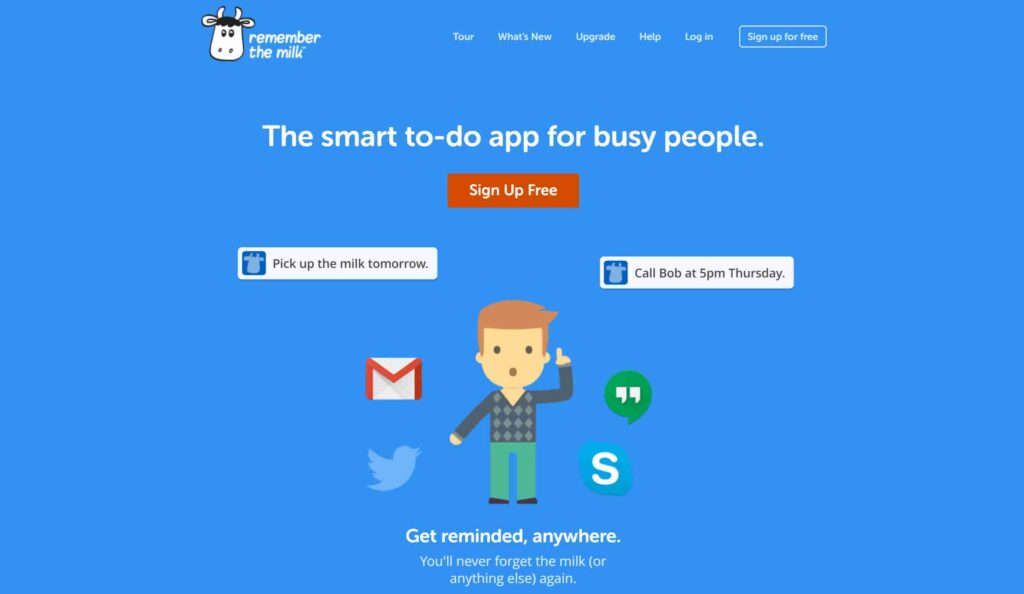
If you frequently feel overwhelmed with everything you’ve got to do, Remember the Milk can provide a sense of calmness and organization. You can assign due dates and reminders for all kinds of tasks and include extra info, such as locations, passwords, and details to help you complete them.
“Remember the Milk (RTM) originated because we were hopelessly disorganized and fed up with constantly forgetting things, including the milk. So, we decided to build a web app to help us remember stuff. RTM was originally intended as something for just the two of us [myself and co-conspirator Omar Kilani], but we decided to put it on the Interwebs in case others found it useful too. We launched in October 2005, and it kind of just grew from there!” – Emily Boyd, Co-founder

Evernote allows you to capture information, categorize it using detailed tags, and store it in notebooks in a way that makes sense to you. It helps you hold onto important information and quickly find it when you need to.
“Can you imagine a smart guy with a bad memory? When you can’t remember somebody’s name, you look stupid. Memory and smartness are integrated. We all have hundreds of thousands of pieces of information, but it’s useless if we can’t find any of it. In business, the worst thing we can say is, ‘Oh, I’m sorry, I forgot your name.’ This is a product I need myself.” – Stepan Pachikov, Founder

https://www.boomeranggmail.com/
An excellent way to work through your to-do list at any time of day, Boomerang for Gmail lets you compose emails and schedule them to be sent at the optimum time. You can also find out if/when the recipient opened your message.
“Having Inbox Zero itself is not a very sustainable goal; you’re just continuously putting energy into processing junk, and that takes so much of your mental energy throughout the day. I don’t want to use [the morning] up making decisions on email.” — Aye Moah, Founder

A cloud-based storage system, Dropbox lets you store all kinds of digital files in one place online and access them from anywhere with an internet connection. It also lets you send large files that are typically too big to send via email.
“I was sick of carrying a thumb drive around and wanted to be able to access my files from anywhere. One day I started writing code to solve this problem for myself, and it was quickly clear that lots of people had similar issues and could benefit.” – Draw Houston, CEO/co-founder
If you’ve tried ADHD apps and other at-home solutions to improve your ADHD without any success, it may be time to seek professional help. Make an appointment with one of our Cyti therapists and get back on track to taking back control of your life.
They’ll be able to help you determine your biggest problems and put together a step-by-step plan to help you better manage your life. By developing useful skills and techniques, you’ll be able to cope with your symptoms and improve your overall quality of life.
Krystie’s favorite types of therapy to use with her clients are EMDR (Eye Movement Desensitization and Reprocessing), DBT (Dialectical Behavioral Therapy) and SFT (Solution Focused Therapy). She also incorporates Cognitive Behavioral Therapy and Internal Family Systems with clients as needed. She prefers to work with clients ages 14-100. She is especially skilled with trauma and parenting problems/support, family issues.
If you live alone or spend a lot of time on your own, you may suffer from skin hunger without realizing it. Almost everyone desires physical touch from other living beings and when we don’t get enough of it, we experience skin hunger, also known as touch deprivation. The touching we crave can be something casual like a simple pat on the back or something as intimate as cuddling in bed.
We rarely notice our desire to receive physical touches from others unless there’s a big difference between the amount we want to receive and the amount we actually receive. The recent pandemic and the subsequent quarantines and self-isolation periods left many of us craving much more physical touching than we were receiving.
Feeling skin hunger can something be similar to feeling hunger for food. When our bodies crave food, our stomachs tend to growl and we often feel dizzy. Just as there’s a physical reaction to not getting enough food, there’s also a genuine physical reaction to not getting enough physical contact with other living beings.
When we suffer from touch deprivation, we can start to feel anxious, stressed, lonely, depressed, and listless. Although we’re surviving, we certainly don’t have the optimum conditions needed to thrive.
Did you know that the skin is the largest organ in the body? Just like all other organs in the body, it regularly sends signals to your brain about what’s going on.
When someone you like touches you in a pleasing way, your brain releases a chemical called oxytocin. Oxytocin is often referred to as the love hormone and it makes you feel great. It encourages bonding between people and boosts social recognition.
Physical touch is one of the first things we crave after being born. That’s why skin-to-skin contact between the mother and child is recommended immediately after birth. It encourages the release of oxytocin in both the mother and child, helping the two to develop a life-long bond.
While we can’t survive without food, it is possible to survive without any physical touch. There are some people in the world who don’t like being touched and don’t need the touch of others to feel happy and fulfilled. However, there are some people who crave physical touch and because of a lack of friends and family members, can’t get as much as they need to be happy.
If you’re craving the physical touch of others, but you live alone and aren’t getting as much as you need to live a healthy life, there are some things you can do. Try the following suggestions until you find a solution that works for you.
If you’re struggling with skin hunger and you’re feeling stressed, anxious, or depressed as a result, consider reaching out to a therapist. They’ll be able to help you understand why you feel this way and discuss the options available to you. Just having someone listen to you and validate your feelings can make you feel better.
Touch starvation also know as skin hunger, refers to the physical and emotional longing for human touch and connection, often experienced when one lacks physical contact with others for an extended period. It can lead to feelings of loneliness, depression, and increased sensitivity to touch when it finally occurs.
Skin hunger, also known as touch deprivation, is not a formal disorder but refers to a longing for physical touch and human connection. It can affect mental well-being, but it’s a common human need, especially during times of isolation or loneliness. Seeking social support can help alleviate its effects.
You’ve probably heard of family therapy and couples therapy. The terms are often used interchangeably, but they’re two distinct types of counseling that can help you resolve different kinds of problems.
The main difference between the two is the people that are involved. Couples therapy involves the two people who make up the couple. Family therapy involves the members of the family unit. This could be one parent and one child, both parents and one child, or everyone in the family — parents, aunts, uncles, stepparents, siblings, grandparents, and so forth.
Keep in mind that marriage counseling is more expensive than other forms of therapy, this is because the therapist is treating two people at the same time, so two diagnoses are needed.
Other distinctions make each type of therapy better suited to different issues. Here’s an overview of both types of therapy and the concerns they’re best at addressing.
Couples therapy focuses on you as a couple and your relationship. If you and your partner have problems in your relationship, couples therapy can help you reconnect and improve your bond.
Couples counseling can be helpful at any stage of your relationship, whether you’ve just started getting serious with someone or you’ve been married for decades. Marital status, race, age, faith, and sexual orientation don’t matter. Couples therapy can help any couple who is having problems.
Many different issues can be improved through couples therapy. Common problems addressed include communication, finances, recurring arguments, sexual desire differences, feeling disconnected, problems caused by external issues, and infidelity.
Various types of couples therapy are designed to resolve different problems and relationship dynamics. Here are some of the most common:
Family therapy takes the entire family unit or parts of it into consideration and helps you resolve issues. If you and other family members have problems, family therapy can help you manage your conflicts and grow stronger.
Family counseling targets problems that affect the mental health and the functioning of a family. It can help you build stronger connections with other family members, improve the way you communicate, and help you manage conflicts within your family unit.
Some of the most common issues resolved through family therapy include creating a better home environment, understanding the unique problems a family might face in the future, solving specific family problems, and decreasing conflict.
There are several forms of family therapy designed to improve different issues. Here are some of the most common:
What kind of counseling is the right choice for you depends on your situation. You need to find the right combination of counseling services that best suit your specific needs and the needs of your family.
Many people benefit from a variety of counseling services. These may include individual counseling, family counseling, and couples counseling. If a couple is having issues, that could cause issues within the family unit.
Being honest about your concerns and problems with your counselor/therapist can help you develop the best solutions for you and your family.
In a nutshell, YES! Couples counseling does seem to work for the vast majority of people, but it really depends on the couple, any relationship is hard work. In some cases, personalities are so vastly different that couples counseling has virtually no chance of success. Some people change and grow apart, which means they are no longer a good match for each other. Find more on “does couples counseling work?” in this article.
When deciding between family counseling and couples counseling, you need to consider the nature of your problems and the people involved.
Are your issues just between you and your partner? Or do they extend and affect other members of your family? If you’re having problems in your relationship, you may be better off working them out with your partner in couples counseling.
Even if they’re affecting the rest of your family, you should consider resolving the issues with your partner first, then consider bringing other family members in and attending family counseling sessions.
Alternatively, you may be having problems with another family member, consequently harming your relationship. In this situation, you could better address your issues at family counseling. After they’ve been resolved, if your relationship with your partner doesn’t naturally improve, you could consider couples counseling to help strengthen your bond.
If your problems are restricted to you and your partner, without impacting any other family members or your relationship with them, marriage counseling is the best route. Alternatively, suppose your issues affect other family members, involve other people in your family unit, or are impacting the relationship you have with others in your family unit. In that case, family therapy could be the best solution. Some people even get counseling before they get married, this is a great way to sort out any issues before they start.
Both couples and family counseling are very personal types of therapy. Although they follow a basic structure, each session is designed and created for the specific person or people attending.
Because of this, it’s difficult to specify what kinds of issues are addressed in a therapy session, as each session is personal to you and the problems you’re facing as a couple or a family.
You should jot down all your concerns and what issues you need to have addressed. This way, you can be sure you make the most of your counseling sessions and know that each of your problems receives the individual attention it requires to come to a satisfactory resolution. Core issues can be addressed during couples therapy sessions first, then the problems that have resulted from those core problems can be resolved through family counseling.
Your therapist will give you homework but there are some exercises you can do yourself at home.
Now is the time to regain control of the situation. Call CytiPsych to schedule your counseling appointment with Cyti Psychological. We have knowledgeable, licensed therapists who will help you address your concerns while overcoming your relationships’ obstacles. We offer confidential, personalized care that will make a difference in your life. Find more information about rates here.
Family constellation therapy is a type of alternative family therapy which can offer a new approach when all other methods have failed. It’s based on the notion that problems are passed down through generations and ultimately cause stress.
By considering our emotions and perceptions from someone else’s point of view, we’re able to break out of the patterns which result in our suffering. Working through our family constellation provides us with the knowledge and insight we need to determine the cause of our problems and solve them.
Important note
Bert Hellinger’s work is the cornerstone of today’s family constellation therapy. He was part of a German family that survived WWII without giving up their moral values. Because a lot of his works were produced only in his native language, his extremely controversial views are often unknown by people who don’t speak German.
His views are heavily patriarchal, placing great value on antiquated stereotypes and gender roles. He also considered homosexuality a “disease” which needed to be cured and held several anti-Semitic views.
With this in mind, it’s important to understand that family constellation therapy doesn’t need to involve any of these views. While Hellinger supported them in his workshops, today’s family constellation therapy sessions are created with a much more modern and inclusive approach.
Unlike other forms of family therapy, family constellation therapy is often attended by a single family member or a couple who is having problems with other members of the family. No other family members are present or have any involvement.
During a session, a workshop takes place between a group of individuals who are not related, but who all want to improve issues in their own families. They focus on one family’s problems at a time.
While workshopping, each person in the group takes on the role of a member of the family, including the original family member or couple (known during the session as the “seeker” or “seekers”) who approached the therapist with their problem.
The individuals only know a little bit about the family members they represent. Their job is to empathize with their character and, using their personal perception coupled with the information received, describe how they feel.
It’s the seeker’s job to watch the imitation family and listen to the members. By doing so, they’re able to observe fresh family dynamics and make connections they may not have considered before. As the individuals standing in for other family members only know limited information, they’re able to offer new insights and suggestions.
Many seekers find this an enlightening experience which allows them to see their personal situation from a new perspective. The emotions shared by the people taking part in the workshop often shed light on problems which the seeker was previously oblivious to.
It’s not only the seeker who benefits from family constellation therapy — the others standing in for family members can profit, too. They gain the opportunity to recognize sides of themselves and their family unit they never previously considered and may learn more about their own personal situation or trauma they’re trying to resolve.
Family constellation therapy is based on the belief that every family member, regardless of age, yearns to feel significant and discover their place within the family dynamic. People who take part in sessions often have significantly emotional reactions in terms of their relationships with other family members.
Most people opt for family constellation therapy because it’s much shorter than other forms of counseling. Issues can often be addressed after a single session, in comparison to other types of family therapy which can last weeks or months. It also has the advantage of addressing issues in which other family members are involved, without requiring their presence.
This type of alternative counseling views the family as a system and considers each individual’s role in that system. It works by exploring family relationships which go back generations and discovering how they affect the present.
Many parts of our lives are affected by family systems with unspoken rules and regulations. Problems often arise when people fail to follow the rules — whether or not they’re aware of what they’re doing. The roots family constellation therapy explores are often ones that no longer work for us, are not healthy and may not even be accurate in today’s world.
The following concerns can all be addressed with success through family constellation therapy:
Depression, anxiety and substance abuse can also be improved through family constellation therapy. These common issues are often the result of a genetic predisposition or learned behaviors which can continue on through multiple generations.
Family constellation therapy can determine if current problems and unwanted behaviors are based upon issues from previous generations. With this information, it’s easier to work on problems and resolve them for a better quality of life and improved relationships with other family members.
Despite there only being a limited number of studies, research suggests that family constellation therapy is effective at improving mental health. Additional studies show that it continues to have mid- and long-term effects, long after the session or sessions have ended.
Even when family constellation therapy doesn’t fully solve the problems presented, it can still be helpful. Some people who take part in even a single session report gaining a new understanding about their family members and the problems they’re facing. With this fresh perspective, they’re able to return to their family units and heal their relationships on their own.
Family Constellation Therapy involves representing family members or elements in a group setting, revealing hidden dynamics and conflicts. Through positioning and interactions, therapists aim to resolve issues, releasing emotional entanglements, and facilitating healing within family systems, though its scientific validation remains controversial.
Family constellation in Adlerian therapy refers to the roles individuals adopt within their family of origin, shaping their behaviors and beliefs. Understanding these roles helps clients gain insight into their issues and work toward healthier relationships and self-improvement.
Visiting a therapist for the first time can be a nerve-wracking experience, especially if it’s because your child is facing some behavioral challenges. But sometimes it’s what you need to do to resolve recurring issues and bring your family closer together.
To help put your mind at ease, here’s everything you need to know about pediatric therapy. Our mini-guide includes everything from the types of problems a children’s therapist can help with to what happens in therapy sessions.
Pediatric or children’s therapy for grieving children is like any other type of therapy but specially designed for children under the age of 18. Many children and teenagers have problems that greatly impact their feelings, behavior, and learning abilities.
In children’s therapy sessions, your child is in a safe space where they can discuss their feelings and the therapist can get to the root of the problem. When the issues have been determined, the therapist will help your child develop the skills and techniques they need to feel better and improve their situation.
Pediatric therapists help children and teens with all kinds of problems. Here are some of the most common issues children’s therapists can help with:
Going through challenging times
Experiencing uncomfortable feelings
Mental healthy conditions
Pediatric therapy works differently depending on the age of your child. Most children learn fastest through action. If your child is young, you’ll spend time as a family playing, drawing, and talking in therapy sessions. If your therapist feels that it is more appropriate to do “play therapy” with your child alone, they will let you know.
Play therapy is the gold standard for children under the age of 12. Studies show that children act out their inner worlds best through their imaginations and through directed play. Your child’s therapist will guide your child through different types of play activities designed to help them process their feelings and to learn new skills to express their feelings in a healthy way. Kids love play therapy because it doesn’t seem like therapy at all, which is great!
During sessions with teens, they’re encouraged to talk through their feelings and work on finding solutions with the therapist. The therapist will guide them through activities and help them develop the skills they need to cope.
Whatever the age of your child, the therapist will support them as they learn and help them believe in themselves. They’ll praise your child and help them become aware of their strengths while trying to improve their weaknesses.
Some types of therapy sessions are conducted between the therapist and the child. Other forms involve the whole family. Whichever type of therapy your child is receiving, you can always talk to the therapist and ask for ideas on how to help your child more at home.
The first therapy session is usually done with the therapist, your child, and you. Your therapist will ask you both questions and listen carefully to your answers. This helps them learn more about your family unit.
After that, your child will attend further therapy sessions, during which the following may take place:
There’s no one answer to this question. How many therapy sessions your child needs really depends on what the problem is and how committed you and your family are to solving it. For example, helping your child learn coping methods to handle their grief after losing their pet will take fewer sessions than a structural family therapy treatment plan that involves a number of different family members.
The goal of pediatric therapy is to help your child to get the tools they need to address their problems or to help them manage their symptoms better. Depending on what the issues are, this could take weeks, days, or even months.
Although it’s your child who really needs to commit to pediatric therapy to make it work, there are things you can do to help your child get the most out of therapy. We recommend:
All families have problems. But if you feel like your issues are tearing your family apart and nothing you’ve tried seems to work, it may be time to reach out. Our team of Cyti therapists is trained in pediatric therapy. They can effectively communicate with your child and get to the root of the problem.
Asking for a little help isn’t something you should be ashamed of. Making an appointment to see a children’s therapist is a brave step that shows how much you care about the people around you. Get in touch today and do the best thing to get your family back on track.